
“I will give thanks to the LORD with my whole heart;
I will recount all of your wonderful deeds.
I will be glad and exult in you;
I will sing praise to your name, O Most High.”
- Psalm 9:1-2
Psalm 9:1-2
Psalm 9 overflows with praise and celebration for God. God is addressed as LORD (Yahweh) and Most High. He is known as the just and righteous judge, eternal ruler, and refuge (stronghold). God’s actions are presented like this: God hears and remembers his people. He is gracious and merciful. God is the giver of life. Salvation comes from him. Wondrous are the works of his hands, and he is worthy of praise and thanksgiving.
The Contrast of David's Life
King David approached prayer, praise, reflection, and declaration differently than Western civilization typically practices. David’s life was messy and filled with heartache and grief. His family was broken and dysfunctional. He dealt with sexual temptation. He grieved the death of an infant son. David ruled a kingdom and faced many enemies. And yet, David spends more time and more words declaring God’s nature, character, and actions than he does on his physical circumstances.
This is because David acknowledged that his life was not his own, but that he belonged to God. This acknowledgment led him to practice the disciplines of remembrance, celebration, and lament. When broken, sinful, or physically crippling circumstances arrived, David did not pretend everything was okay. He allowed himself to walk through grief, trusting that God would bottle every tear up. He was able to do this because, in the middle of his laments, he was able to recall God's faithfulness in his past and lean on it for present assurance and future hope.
Active Remembering
This practice of remembering is deeply rooted in Jewish culture. Remembering is not the same as reminiscing. Remembering is an active state of being. It involves pausing to look back at what God has done in order to gain courage to move forward with the assurance that God will continue to act and be present in all of our circumstances. Remembering is designed to shift our focus off of our circumstances and onto God.
Praying for help in difficulty and sickness and for deliverance from sin and trial is important. Psalm 10 is full of lament and questions as to why bad things happen and when God will help. But, the psalmists never let their pleas for help and moments of distress override the truth of who God is, what he has done, and what he promises to do. Each psalmist made a practice of remembering and celebrating what God has done in the good times to help them in the bad times.
A Challenge for Our Generation
If David, Asaph, or even Paul attended our weekly prayer meetings or took a glimpse at our prayer journals, what do you think they would have to say? Would they be encouraged by the glory the Lord is receiving from the words of our mouths? Or would they shake their heads and say, “Yes, pray for these things, but you’ve forgotten the One you are praying to. You’ve made your words, your remembering, and your heartbeat of fellowship more about circumstances than about the One who knows all things, to whom glory and praise are deserved?”
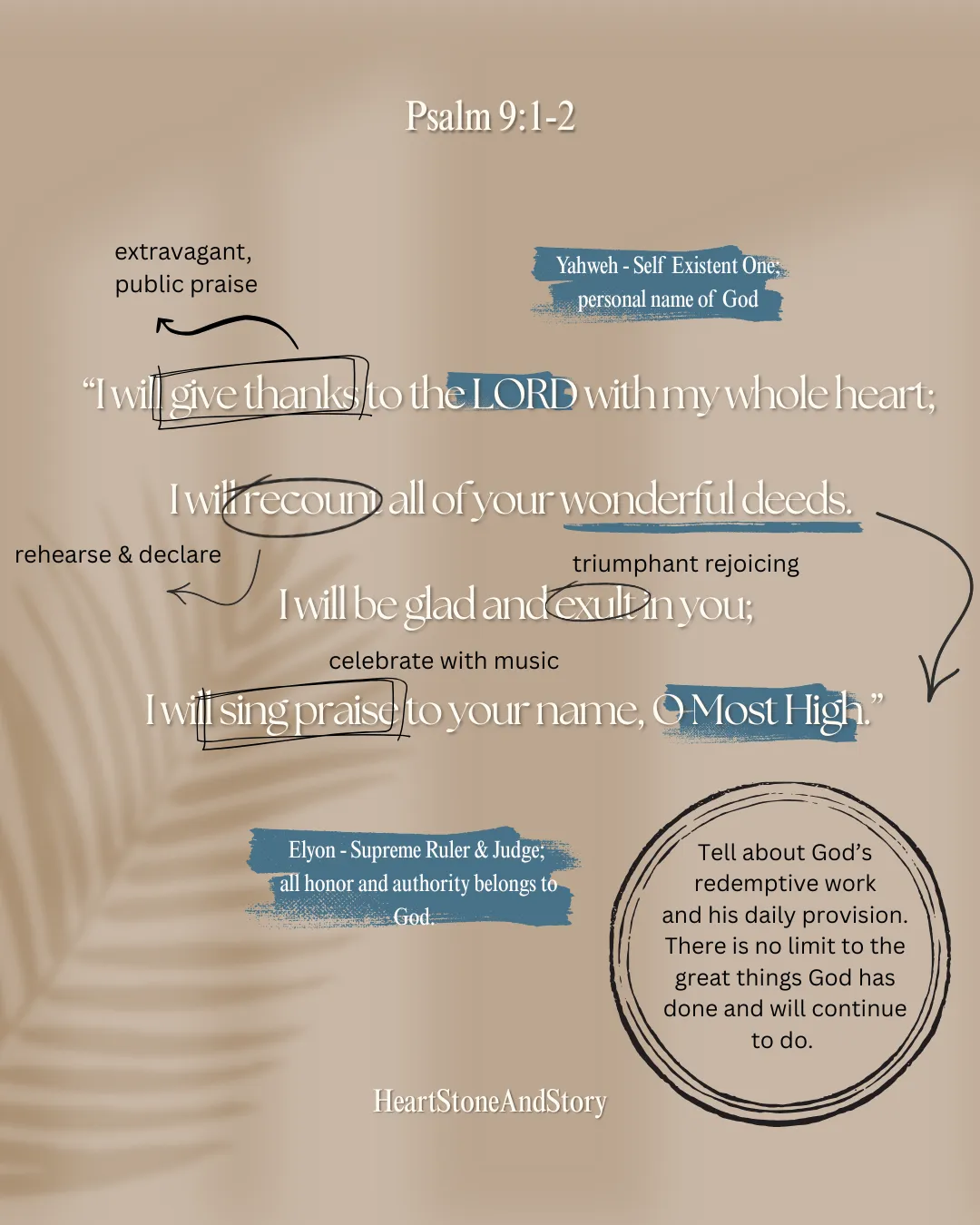
David gives us a model for worshipping God using four "I will" statements in Psalm 9:1-2:
- I will give thanks: This is publicly declaring praise to God, not withholding any of myself from him.
- I will recount: To rehearse and declare all of God’s redemptive work and daily provision.
- I will exult: I will not live defeated, but will triumphantly rejoice in my Creator and Savior.
- I will sing praise: Celebrate the name and character of God with worship.
God desires lives fully surrendered to him. He wants our private and public worship. He is worthy of having his praise always on the tip of our tongues, and his truth continually rehearsed in our minds and hearts.
This week, as you spend time engaging with the Word of God, practice celebrating and remembering who God is and what he has done. Giving God his rightful place in your life will transform your worship.