
For several years, summer has been my time of quiet study. A time to sit and listen without the need to produce or regurgitate information. This was born out of a need to slow down and reorient my heart to focus on God alone.
In a world centered on content creation, and lives revolving around pouring into others, we need to find rhythms of sitting at our Savior’s feet. While this practice should be incorporated throughout the year, summer has become my designated time to be still and know that Yahweh is God.
This time of stillness and study in July typically prepares me for the upcoming school year and holiday celebrations. The past three years, God has placed a heavy burden to lean into and understand the importance of the discipline of remembrance. This year, He has shifted that focus to the discipline of prayer.
Prayer is one of the most practiced disciplines in nearly every world religion. It is the means by which man communicates with God. But what separates a Christian’s prayers from those of any other religion? The simple and true answer is that Christians pray to the One true God. However, there are times when God’s children treat prayer no differently than a pagan does, treating God like a magic genie. In many cases, Christians are the least disciplined at praying compared to other world religions.
Prayer at times can be reduced to a religious practice, a repetitive phrase, or a laundry list of requests, unless met with a crisis. So then, what is the discipline of prayer? What separates Christian prayer from other religions? How do we pray?
What Is Prayer?
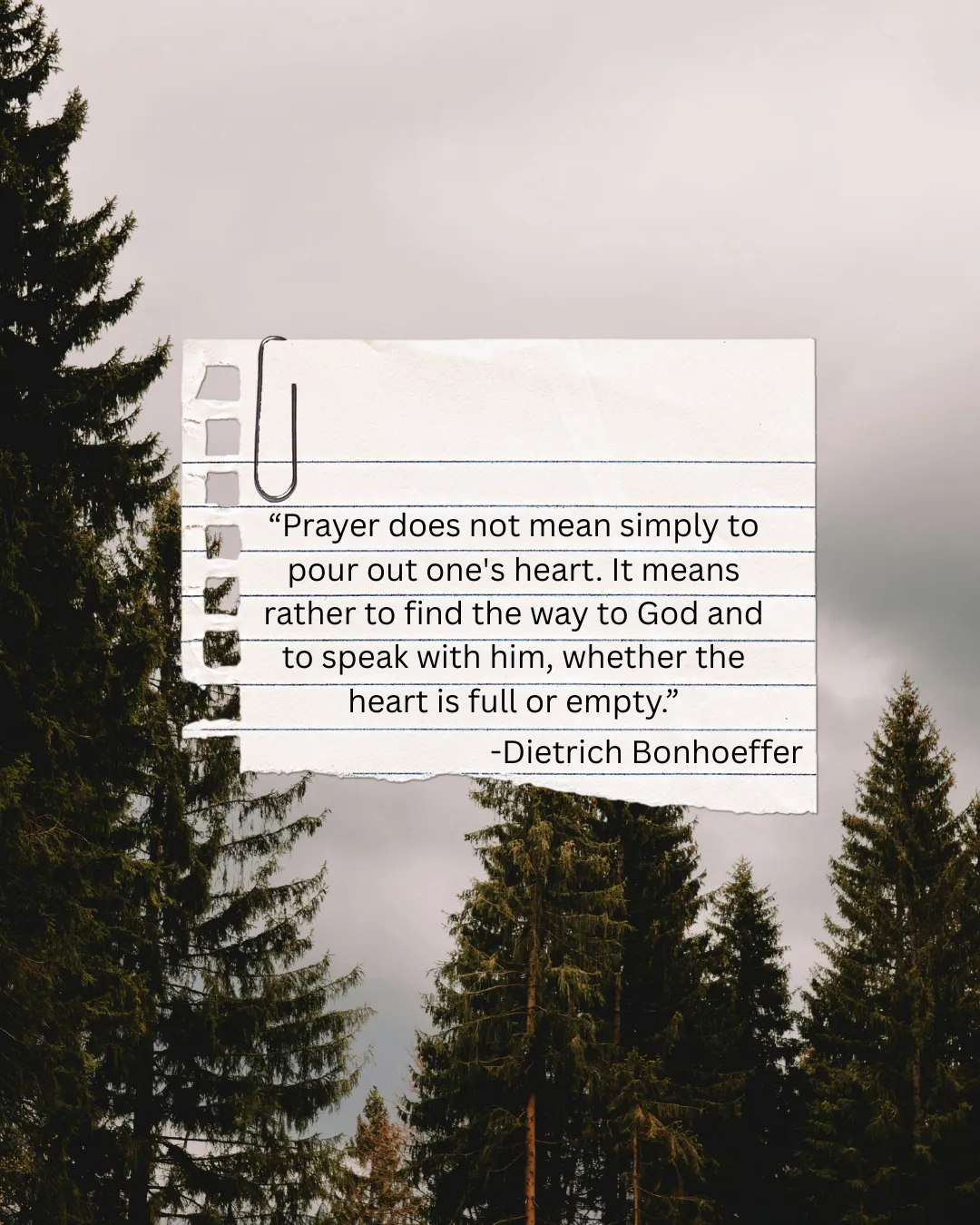
“Prayer does not mean simply to pour out one's heart. It means rather to find the way to God and to speak with him, whether the heart is full or empty.”
— Dietrich Bonhoeffer, Psalms: The Prayer Book of the Bible
Prayer is man’s communication with God. It is designed to be both reactive and proactive.
Reactive prayer is man’s response to who we believe God is. If we have a deep belief that God is a God who answers prayers, then our natural reaction will be to ask Him for things. If we believe God should be praised, then our inclination will be to give Him thanksgiving. This kind of prayer is the way we typically approach conversing with our heavenly Father.
Proactive prayer is man’s intentional response to who God reveals Himself to be. Conversation with anyone is never meant to be one-sided. One-sided conversations result in one person monopolizing the conversation—usually about themselves—while the other person patiently listens with little to no participation. Lack of participation on the hearer'spart is not because they do not want to join in the conversation. They simply haven’t been invited to do so.
Effective conversation is only attainable when two people are contributing and speaking the same language. If we want to be proactive in prayer, then we must increase and deepen our Bible reading. We cannot have one without the other. In order to pray intentionally, we must get to know the God we are talking to through His Word.
If prayer is communication with God, then our prayers will only be as effective as our knowledge of the language we are speaking. God speaks to us through His Word. Therefore, in order to have a full, proactive prayer life, we must know and understand God’s language. Our prayer life is linked to our biblical literacy.
What Separates Christian Prayer From Others?
“For what great nation is there that has a god so near to it as the LORD our God is to us, whenever we call upon him?”
— Deuteronomy 4:7
If prayer is an active conversation between God and man, then the first way to note the difference between a Christian’s prayer and another’s is to define what prayer is not.
Prayer is not:
- transactional
- hopeless
- a ritual obligation
- rigid & rule-bound
- energy focused
Prayer was never meant to restrict, deter, harm, or offer a works-based salvation. Tim Keller says in his book Prayer that “Prayer is simply a recognition of the greatness of God.” Praying to Yahweh is separate from any other prayer because our LORD is alive. He is near and He is actively participating in the lives of His people. When we pray, it is not to bolster ourselves or manipulate God. True prayer is an outflow of love and devotion to God.
Our prayers are effective because we pray to a triune God: Father, Son, and Holy Spirit.
The Father:
- sees and hears us when we pray (Matt. 6:6)
- answers (Jn. 16:23)
The Son:
- mediates on our behalf (Hebrews 7:25, Romans 8:34)
- teaches us to pray (Matthew 6:9-13)
The Holy Spirit:
- helps in weakness and intercedes for us (Romans 8:26-27)
- gives us access to the Father (Eph. 2:18)
We can boldly approach the throne of grace and receive mercy and find grace to help us because we serve a living God who invites His children into active conversation with Him.
How Do We Pray?
There are many variations and arguments on the “correct” way to pray. No one method or acronym is superior to the other. Each offers guidance for talking with our holy God. My study through prayer this summer has been leaning into the ACTS method, which follows the method of the Lord’s Prayer in Matthew. ACTS = Adoration Confession Thanksgiving Supplication.
“Prayer in all its forms – adoration, confession, thanksgiving, and petition – reorients your view and vision of everything. Prayer brings new perspective because it puts God back into the picture. Merely addressing God verbally about our needs, fears, hopes, concerns, questions, perplexities, and sins almost immediately forces us to think differently about them.”
— Tim Keller, Prayer
Adoration leans into the awe of who God is. Confession is an honest admission of sin. Thanksgiving gives praise for the works God has done and gifts He has given. Supplication humbly brings requests before God.
Over the next four weeks, we will dive deeper into each form of prayer. I invite you to join me on this journey to increase intimacy and intentionality in your conversations with God.